
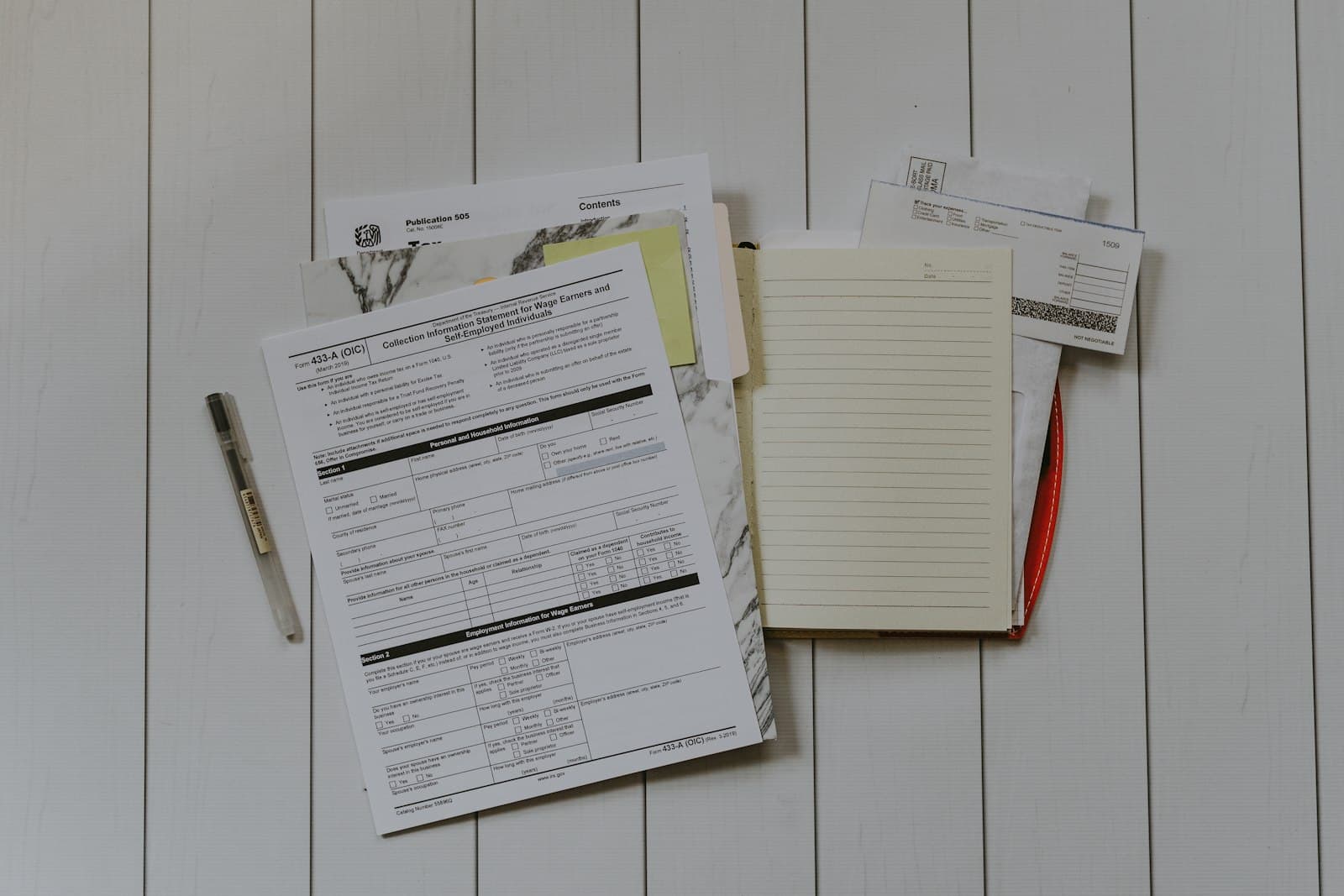
If you haven’t filed taxes in several years, the situation usually does not improve by waiting longer. The IRS recommends filing all required past-due returns even if you cannot pay the full amount you owe. Filing can help limit additional penalties and interest, preserve eligible refund claims, and give you a clearer path toward resolving your tax situation.
The process can feel complicated when several years are missing, but it becomes more manageable when you handle it one step at a time.
What Happens If You Don’t File Taxes for Several Years?
The consequences depend on whether you were required to file, whether tax was due, how many years are missing, and whether the IRS or a state tax agency has already contacted you.
Possible consequences include:
- Failure-to-file penalties
- Failure-to-pay penalties
- Interest on unpaid tax
- IRS notices
- Collection activity
- A refund being held
- Losing the right to claim an older refund
- Problems documenting income for loans or other financial needs
The IRS specifically advises taxpayers to file past-due returns even when they cannot pay the full balance immediately.
Does the IRS Know If You Haven’t Filed?
Often, yes.
Employers, banks, payment processors, investment firms, retirement-plan administrators, and other payers may report income to the IRS even when you do not file a return.
That means the IRS may already have records showing income connected to your Social Security number or Taxpayer Identification Number.
If the IRS believes you were required to file, it may send notices requesting the missing return.
Common notices can include notices showing that the IRS has no record of a required return or is holding a refund because another return has not been filed.
Can the IRS File a Tax Return for You?
In some cases, the IRS can prepare a proposed assessment based on information available to the agency.
This is commonly referred to as a Substitute for Return.
The problem is that an IRS-prepared assessment may not include every deduction, credit, filing status, expense, or other tax benefit that could apply to you.
The IRS notes that even when it prepares a substitute return, filing your own accurate return may still allow your account to be adjusted based on the information you report.
For that reason, it is usually better to prepare an accurate return based on your actual records.
How Serious Are Failure-to-File Penalties?
Federal failure-to-file penalties can become significant when tax is owed.
For many individual federal income-tax returns, the IRS currently calculates the failure-to-file penalty at generally 5% of unpaid tax for each month or part of a month the return is late, up to 25%.
If both failure-to-file and failure-to-pay penalties apply during the same month, special combined calculations apply.
The exact penalty depends on:
- The tax year
- Amount of unpaid tax
- How late the return is
- Payments or credits already applied
- Whether penalty relief applies
Do not assume that every unfiled return automatically creates the same penalty.
What Happens If You Owe Taxes and Still Haven’t Filed?
If tax is owed, waiting can increase the amount you eventually need to resolve.
Possible additions include:
- Failure-to-file penalties
- Failure-to-pay penalties
- Interest
The IRS advises taxpayers to file even when they cannot pay the full balance.
After filing, payment options may include:
- Paying in full
- Short-term payment arrangements
- Installment agreements
- Other collection alternatives for qualifying taxpayers
The important distinction is:
Not being able to pay does not usually mean you should avoid filing.
Filing establishes the actual amount owed and makes it easier to evaluate the next step.
Can the IRS Collect From You If You Never File?
Potentially, yes.
If the IRS prepares a proposed assessment and the resulting tax remains unpaid, collection actions can follow.
The IRS states that collection activity may include actions such as:
- Federal tax liens
- Bank levies
- Wage levies
Repeated failure to file can also lead to additional enforcement consequences in serious cases.
This does not mean every person who misses a return immediately faces collection action.
The process depends on the circumstances and what the IRS has already done with the account.
Can You Still File Taxes After Several Years?
Yes. Past-due returns can often still be filed.
The process usually starts by identifying exactly which years are missing.
Do not assume that every year needs the same form or that today's tax rules should be applied to older returns.
Each return generally needs to be prepared using:
- The forms for that tax year
- The income reported for that year
- The deductions and credits available for that year
- The filing status that applied
- The federal and state rules in effect at the time
This is especially important when several years are involved.
How Many Years of Back Taxes Do You Need to File?
There is no single number that applies to everyone.
The required years depend on:
- Your filing history
- Your income
- Whether you were required to file
- Business activity
- IRS notices
- California filing obligations
- Other facts
A taxpayer who missed one required return has a different situation from a self-employed business owner who has not filed for six years.
The first step should be determining which tax years are actually missing.
Step 1: Find Out Which Tax Returns Are Missing
Start by reviewing your records.
Useful information can include:
- Copies of previous tax returns
- IRS account transcripts
- IRS Wage and Income Transcripts
- W-2 forms
- 1099 forms
- Business records
- Estimated tax-payment records
- California tax records
If the IRS has already sent notices, review the tax years listed in those notices.
Do not automatically file random years without first determining which returns were required.
Step 2: Gather Your Missing Tax Documents
You will need records for each year.
Depending on your situation, these may include:
- W-2s
- 1099-NEC or 1099-MISC forms
- 1099-K forms
- Interest and dividend statements
- Brokerage statements
- Retirement income documents
- Social Security income information
- Mortgage statements
- Rental-property records
- Business records
- Health-related tax documents where applicable
- Estimated tax-payment records
Organize the documents by tax year before preparing the returns.
That reduces the chance of accidentally mixing information from different years.
What If You Lost Old W-2s or 1099s?
You may still be able to recover some of the information.
Possible sources include:
- Previous employers
- Banks
- Brokerage firms
- Payment processors
- Retirement administrators
- Other income payers
- IRS transcripts
The IRS recommends using transcript services when prior-year income information is needed for a past-due return.
However, IRS transcripts do not always contain every document or expense record needed to prepare a complete return.
This is especially important for self-employed taxpayers.
Step 3: Reconstruct Self-Employment or Business Records
Catching up can be more complicated if you operated a business during the missing years.
You may need to reconstruct:
- Business revenue
- Bank deposits
- Payment-processor income
- Advertising expenses
- Supplies
- Software subscriptions
- Business insurance
- Professional fees
- Equipment purchases
- Vehicle or mileage records where applicable
- Payroll information
- Contractor payments
Do not simply guess expenses.
Use available records to support what is reported.
If bookkeeping records need to be reconstructed or cleaned up before old business returns can be completed, Neza Financial offers bookkeeping and business support, including bookkeeping, QuickBooks setup, account reconciliation, and clean-up services.
Step 4: Prepare Each Tax Year Separately
Every missing return should be treated as its own filing.
For example, a deduction available in one year may have different rules in another year.
Similarly:
- Tax brackets may change
- Standard deductions may change
- Credits may change
- Business deductions may change
- Filing requirements may change
Do not use current-year figures simply because you are preparing the return today.
Step 5: Check Both Federal and California Filing Requirements
If you lived or worked in California during the missing years, you may also have California filing obligations.
The California Franchise Tax Board advises taxpayers who have not filed for one or more years to file as soon as possible, which can help reduce additional penalties and interest.
Federal and California returns are separate.
Filing an IRS return does not automatically satisfy a California filing requirement.
What Happens If You Haven’t Filed California Taxes?
California may impose penalties and interest when a required return is filed late and tax is due.
Current FTB guidance states that the delinquent filing penalty is generally 5% of the amount due for each month or part of a month the return is late, up to 25%.
California also imposes separate late-payment rules.
The amount owed depends on the tax year and individual circumstances.
Can California Help If You Can’t Pay?
Yes, filing is still generally the first step.
The California Franchise Tax Board advises taxpayers to file even if they do not have enough money to pay the full balance.
Depending on eligibility, California options may include:
- Payment plans
- Delayed payment in certain circumstances
- Offer in compromise
Penalties and interest can continue to accrue from the original payment due date.
Step 6: File the Past-Due Returns
Once each return is prepared accurately, file it using the appropriate method for that year.
If you received an IRS notice, follow the filing address or instructions shown on that notice.
The IRS specifically advises taxpayers who received a past-due-return notice to send the return to the location indicated in that notice.
Keep copies of everything you submit.
How Long Does the IRS Take to Process an Old Tax Return?
The IRS currently states that an accurately completed past-due return takes approximately six weeks to process.
That is an estimate, not a guaranteed processing time.
Some returns may take longer because of:
- Missing information
- Errors
- Identity verification
- Additional IRS review
- Multiple unfiled years
- Existing account issues
Can You Still Get a Refund From an Old Tax Return?
Possibly, but waiting too long can permanently eliminate the refund.
The IRS generally states that a past-due return must be filed within three years of its due date to claim a refund from withholding or estimated tax payments.
Refund limitation rules can become more complicated depending on when tax was paid and other circumstances.
The Taxpayer Advocate Service also emphasizes that taxpayers can permanently lose an otherwise valid refund when the Refund Statute Expiration Date passes.
If you may be owed money for an older year, this can make prompt filing particularly important.
Can the IRS Hold Your Current Refund Because Old Returns Are Missing?
Yes.
The IRS states that it may hold an income-tax refund when its records show that one or more required returns are past due.
The refund can remain held until the missing return is received or the taxpayer provides an acceptable reason for not filing it.
This means an unfiled return from years ago can affect a newer refund.
What If You’re Self-Employed and Haven’t Filed?
Self-employed taxpayers should take missing returns particularly seriously.
The IRS notes that if self-employment income is not reported on a federal tax return, that income will not be reported to the Social Security Administration for purposes of Social Security retirement or disability credits.
A self-employed taxpayer may also need to reconstruct:
- Gross business income
- Deductible expenses
- Estimated tax payments
- Self-employment tax
- Business assets
- Other business-related information
Accurate records matter because simply reporting income without legitimate deductible expenses can produce an inaccurate result.
What If a Business Hasn’t Filed Tax Returns?
Business filing problems can be more complex because the filing requirements depend on the entity.
Missing returns may involve:
- Sole proprietorships
- LLCs
- Partnerships
- S corporations
- C corporations
The IRS imposes different failure-to-file penalty structures for various business returns.
For example, current IRS guidance includes separate penalty rules for Form 1065 partnership returns and Form 1120-S S corporation returns.
Neza Tax Services provides individual and business tax preparation, including amended and prior-year returns for clients who need to bring old filings up to date.
Can Late-Filing Penalties Be Removed?
Sometimes.
The IRS may provide penalty relief when the taxpayer meets applicable requirements.
Reasonable Cause
The IRS can consider penalty relief when a taxpayer can show that they exercised ordinary care and prudence but were still unable to file or pay on time.
Reasonable cause is evaluated based on the facts and circumstances.
Automatic Exemption From Penalty
Beginning in 2026, the IRS introduced the Automatic Exemption from Penalty (AEP) process for certain eligible taxpayers.
For qualifying original returns, taxpayers generally need a recent history of timely filing and payment.
The program does not apply to every late return and should not be assumed to cover older years automatically.
California One-Time Penalty Abatement
California also offers a one-time penalty-abatement program for certain individual taxpayers.
The FTB states that eligible individuals may receive a one-time cancellation of qualifying timeliness penalties for taxable years beginning on or after January 1, 2022, subject to specific requirements.
Federal and California penalty relief are separate.
Approval by one agency does not automatically create relief from the other.
What If the IRS Has Already Sent You a Notice?
Do not ignore it.
Review:
- The notice number
- Tax year involved
- Response deadline
- Return the IRS believes is missing
- Information requested
- Filing or response instructions
IRS notices may be issued when:
- No return is recorded
- A refund is being held
- The IRS believes a required return is missing
Follow the instructions on the actual notice rather than relying on instructions for another tax situation.
A Simple Catch-Up Plan
If several years are missing, use this order:
- Identify all missing years.
- Collect income documents and transcripts.
- Reconstruct business records if needed.
- Prepare each year using that year's rules.
- Review federal and California requirements separately.
- File the missing returns.
- Confirm balances or available refunds.
- Review payment or penalty-relief options.
- Keep copies of all returns, notices, and supporting records.
- Stay current going forward.
Trying to solve everything at once can make the process harder.
Handling one year at a time creates a clearer path.
When Should You Get Professional Help?
Professional tax preparation may be useful when:
- Several years are unfiled
- You cannot determine which returns are missing
- You were self-employed
- You owned a business
- Business and personal returns are both missing
- You have rental income
- Records need to be reconstructed
- You received IRS or FTB notices
- A balance is owed
- You may qualify for penalty relief
- A previous return may also need to be amended
The goal is to prepare each required return accurately and then address any remaining balance, refund, or compliance issues in the correct order.
Frequently Asked Questions
What happens if I haven't filed taxes in five years?
The consequences depend on whether you were required to file and whether tax was owed. You may face penalties, interest, notices, collection activity, lost refunds, or other complications. Start by identifying which returns are missing and preparing each required year.
Will I go to jail for not filing taxes?
Most late-filing situations are handled through tax administration, penalties, notices, and collection procedures. However, the IRS notes that repeated or serious non-filing can lead to additional enforcement measures, including criminal prosecution in some cases.
Can I file several years of taxes at once?
Yes. Multiple past-due returns can generally be prepared and filed, but each year should be completed separately using the rules and documents for that particular year.
Should I file if I can't afford to pay?
Generally, yes. The IRS and California FTB both advise taxpayers to file required returns even if the full balance cannot be paid immediately. Payment options may be available afterward.
Can the IRS take my refund because I haven't filed old returns?
The IRS may hold a current refund if its records indicate that one or more required income-tax returns are missing.
Can I still claim a refund from an old return?
Possibly. Federal refund claims generally have time limits, and you can lose the refund permanently if you wait beyond the applicable deadline.
How do I find income records from years ago?
Contact employers and other payers where possible. IRS Wage and Income Transcripts can also help identify income documents reported to the IRS.
How long does an old tax return take to process?
The IRS currently estimates approximately six weeks for an accurately completed past-due return, although some returns take longer.
Can penalties be waived?
Possibly. Federal reasonable-cause relief, certain IRS administrative relief programs, and California penalty-abatement provisions may apply depending on the circumstances.
What if I haven't filed California taxes either?
California has separate filing requirements. The FTB advises taxpayers who have not filed for one or more years to file as soon as possible, even if they cannot pay the full balance immediately.



Ready to Start Catching Up?
If you have several years of unfiled returns, the first step is determining exactly which years are missing and what records are available.
Neza Tax Services helps individuals and businesses with prior-year returns, amended returns, self-employment income, business returns, and other tax-preparation needs.
For help reviewing your situation and determining the next steps, contact Neza Tax Services.